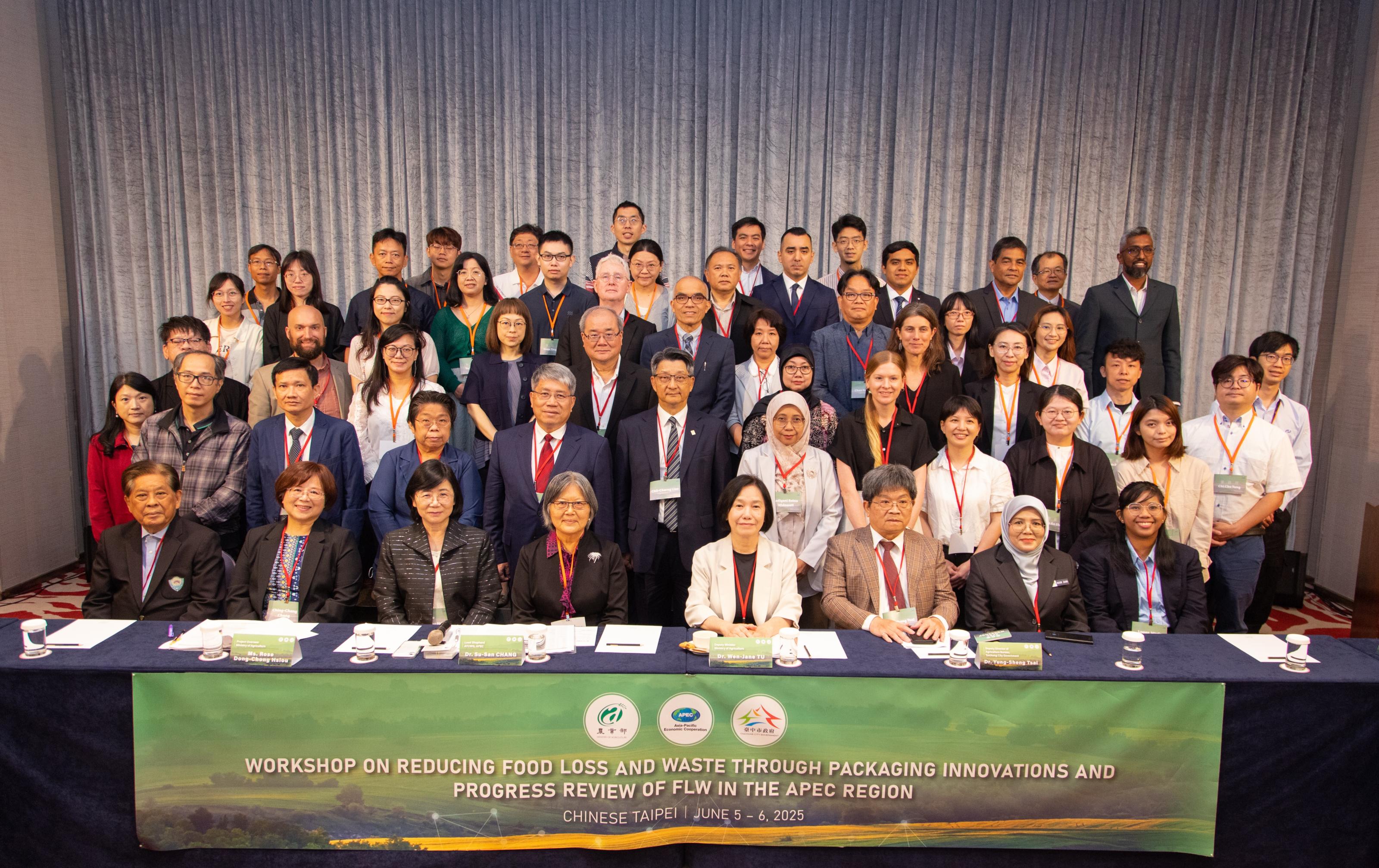
Ministry of Agriculture hosts 2025 APEC “Workshop on Reducing Food Loss and Waste (FLW) through Packaging Innovations”; 16 APEC economies gather to discuss sustainable food solutions in Taiwan
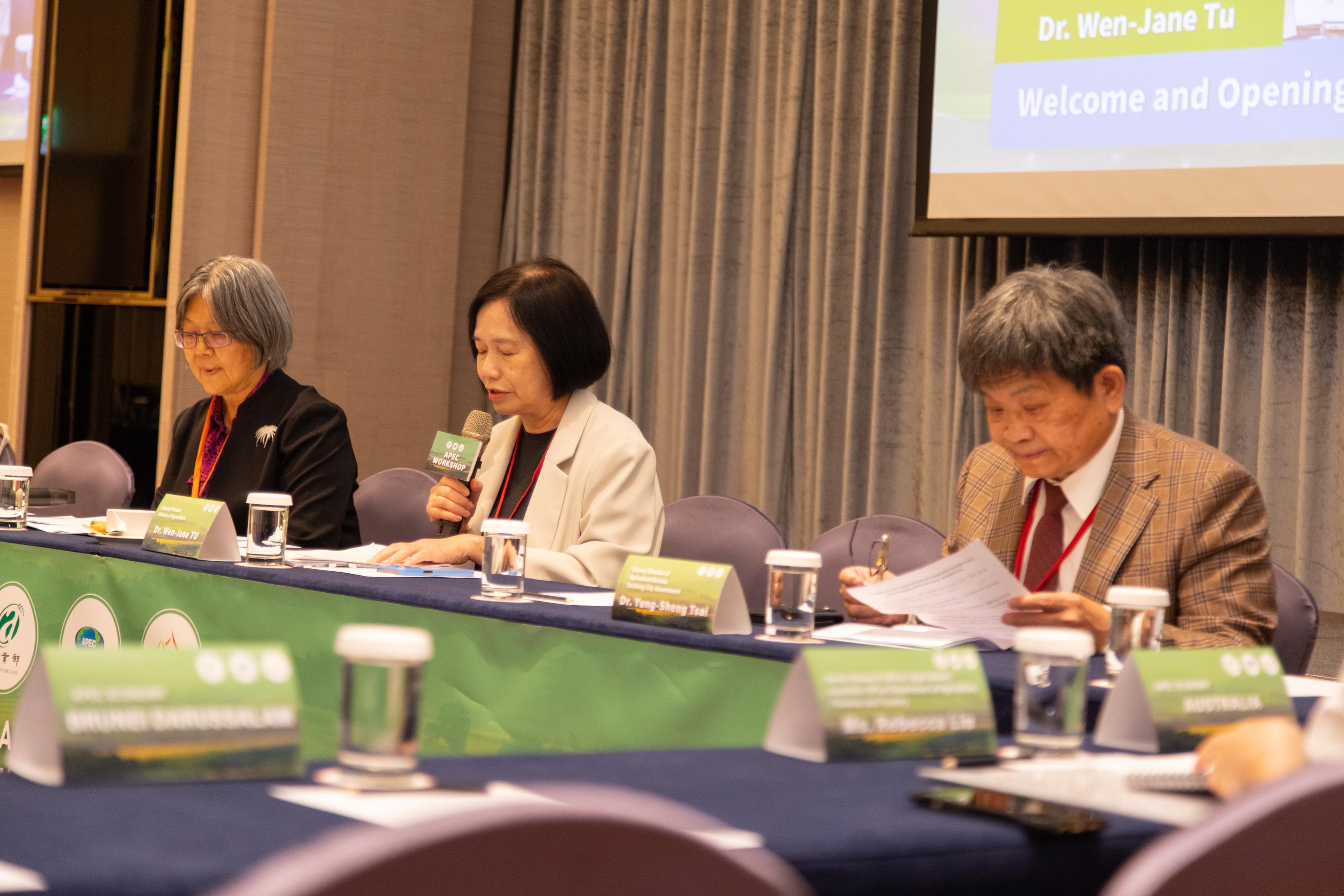
The Ministry of Agriculture (MOA) is currently hosting the “Workshop on Reducing Food Loss and Waste (FLW) through Packaging Innovations and Progress Review of FLW in the APEC Region” from June 5 to 6 at the Evergreen Laurel Hotel in Taichung City. More than 140 people from 16 APEC economies are in attendance, sharing ideas and experiences in the use of innovative packaging technology to effectively reduce FLW. They are also reviewing progress in the promotion of FLW-related policies in their regions. This workshop is funded by APEC, showing APEC’s affirmation of Taiwan’s efforts to reduce FLW.
Taiwan first proposed a multi-year project entitled “Strengthening Public-Private Partnership to Reduce Food Losses in the Supply Chain” in 2013. In 2021, with the backing of all APEC member economies, Taiwan became the “Lead Economy” on the issue of reducing FLW under the APEC “Food Security Roadmap towards 2030.” The MOA states that in order to further deepen international participation on this issue, over the past several years Taiwan has held multiple conferences. The focal points of this latest workshop are practical applications of innovative packaging technology and FLW-related policy performance in APEC member economies. For the workshop, UN Food and Agriculture Organization (FAO) Chief Economist Dr. Máximo Torero Cullen was specially invited to analyze FLW prevention strategies from a global food security perspective. Also invited was Dana Gunders, president of Rethink Food Waste through Economics and Data (ReFED), to share how collaboration between governments and enterprises has effectively promoted reduction in FLW through three activities: goal setting, outcome measurement, and practical action.
According to the FAO’s report on “The State of Food Security and Nutrition in the World, 2023,” packaging technology is a critical tool for reducing FLW. Well-packaged products have longer shelf lives and are better suited to long-distance transportation, facilitating overall food security. On the other hand, poor packaging can cause food losses of up to 20%. As a result, packaging has been listed as one of the world’s top three solutions to the problem of reducing FLW. The 9th APEC Food Security Ministerial Meeting in 2024 reaffirmed the key role to be played by packaging technology in maintaining a stable food supply chain.
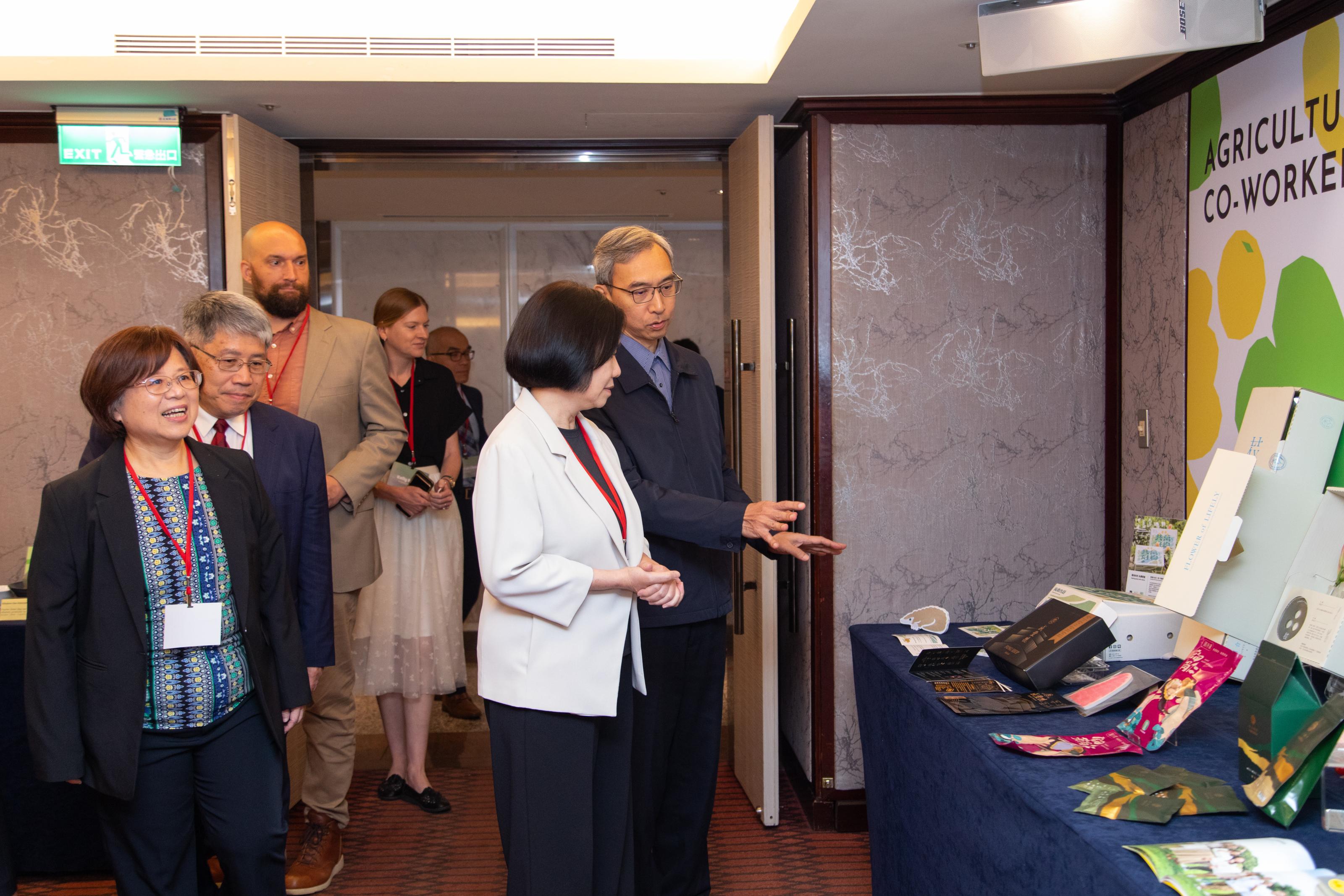
To enrich the experience of attendees at the current workshop and demonstrate Taiwan’s capabilities, the MOA specially invited the Taichung City Government, the Taiwan Design Research Institute, and the Plastic Industry Development Center to work together to set up displays related to food packaging, food bank and redistribution platforms, and successes in sustainable agriculture in Taiwan. These exhibits were set up near the workshop venue and provided with specialized guides. They comprehensively demonstrate Taiwan’s concrete achievements in innovative packaging, the circular economy, and food conservation to APEC member economies, giving APEC representatives valuable information and opportunities for exchanges on best practices.
The MOA says that the APEC region is the world’s most important food production and export region. FLW not only represents wasting of agricultural resources and higher production costs, it impacts producers’ incomes and increases the price burden on consumers. From an environmental perspective, large amounts of wasted food ultimately end in garbage dumps where the fermentation process produces methane that adds to greenhouse gas emissions, aggravating climate change. Therefore, effectively reducing FLW in the APEC region is vital to building a global sustainable food system. As a member of the international community, Taiwan is proactively working through APEC initiatives to promote a reduction in FLW.
This latest workshop not only is engaging in in-depth discussion of innovative packaging technology, it is even more focused on how to effectively reduce FLW at every link in the food supply chain to comprehensively strengthen the resilience and sustainable development of the overall food system. This workshop serves as an important platform where major food policy-makers and representatives of research institutions from Taiwan and other APEC member economies are able to discuss potential policies. It is strengthening the foundations for cooperation to move forward together on related initiatives so that greater contributions can be made to global food security and sustainable development.